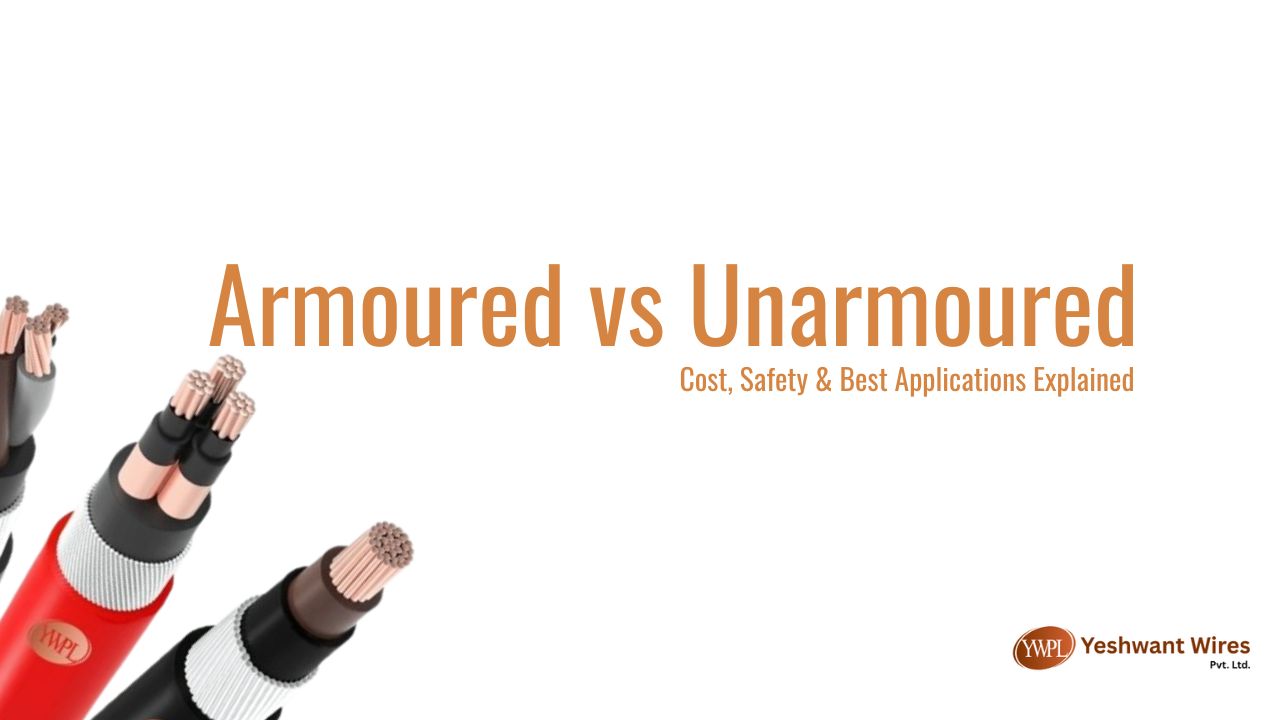
Armoured vs Unarmoured Cables: Cost, Safety & Best Applications Explained

Choosing the right electrical cable is critical for safety, durability, and long-term cost efficiency. In this guide, we compare Armoured vs Unarmoured Cables based on cost, protection, installation, and real-world applications.
What Are Armoured Cables?
Armoured cables, commonly known as SWA cables (Steel Wire Armoured cables), are electrical cables featuring a protective metal layer that shields the internal conductors from physical damage, moisture, and environmental hazards. These heavy-duty cables are specifically designed for challenging applications where standard cables would be vulnerable.
Key Features of Armoured Cables
- Steel Wire Armour Protection: Galvanized steel wires wrapped around the cable provide mechanical strength and protection against impact, crushing, and rodent damage
- Multiple Layer Construction: Includes copper conductors, XLPE or PVC insulation, inner sheath, steel wire armour, and protective outer sheath
- Weather Resistant: Excellent resistance to moisture, UV rays, and extreme temperatures
- EMI Shielding: The metal armour provides electromagnetic interference protection
- Earthing Capability: Steel armour can serve as an earth conductor when properly terminated
- High Voltage Rating: Suitable for both low voltage and high voltage applications
Common Types of Armoured Cables
- SWA (Steel Wire Armoured) cables - most popular for underground and outdoor use
- AWA (Aluminium Wire Armoured) cables - lighter alternative to SWA
- STA (Steel Tape Armoured) cables - flat tape instead of wire armour
- XLPE insulated armoured cables - for high temperature applications
What Are Unarmoured Cables?
Unarmoured cables, also called flexible cables or standard electrical cables, lack the metallic protective layer found in armoured cables. These cables consist of conductors surrounded by insulation and an outer sheath, making them lighter, more flexible, and easier to install in protected environments.
Key Features of Unarmoured Cables
- Lightweight Design: Easy to handle and maneuver during installation
- High Flexibility: Can be easily bent and routed through tight spaces
- Cost-Effective: Lower material and installation costs compared to armoured cables
- Simple Installation: Requires basic tools and less specialized knowledge
- Wide Variety: Available in numerous sizes, types, and specifications
- Quick Termination: Easier to strip and connect than armoured alternatives
Common Types of Unarmoured Cables
- PVC cables - standard domestic and commercial wiring
- Rubber cables - flexible applications requiring movement
- XLPE insulated cables - better heat resistance than PVC
- Twin and Earth cables - common in UK residential installations
- Flex cables - for appliance connections and portable equipment
Armoured vs Unarmoured Cables: Detailed Comparison
Protection and Durability
Armoured cables provide superior mechanical protection against physical damage, making them ideal for harsh environments. The steel wire armour resists impact, crushing, and damage from rodents or sharp objects. These cables can withstand extreme weather conditions and maintain integrity for 25-40 years.
Unarmoured cables offer basic insulation protection only. They are vulnerable to physical damage and require additional protection through conduits, trunking, or cable trays. In protected indoor environments, they typically last 15-25 years.
Comparison Table
| Parameter | Armoured Cables | Unarmoured Cables |
|---|---|---|
| Mechanical Protection | High | Low |
| Safety Level | Very High | Moderate |
| Cost | Higher | Lower |
| Installation | Requires skilled handling | Easy and flexible |
| Best Environment | Outdoor / Underground / Industrial | Indoor / Controlled areas |
Installation Complexity
Armoured cable installation is more complex and labor-intensive. These cables are heavier, require specialized cable glands for termination, need proper earthing of the steel armour, and demand specific bending radius considerations. Professional installation is highly recommended.
Unarmoured cable installation is straightforward and can often be completed by competent DIY enthusiasts. The cables are lightweight, easy to route, and require only basic termination techniques. Installation time is significantly shorter.
Cost Considerations
Armoured cables have higher upfront costs due to material complexity and installation labor. However, their longevity and minimal maintenance requirements often result in better long-term value for outdoor and underground applications.
Unarmoured cables are more economical for initial purchase and installation. They're the cost-effective choice for protected indoor environments where their lower price doesn't compromise safety or performance.
Flexibility and Routing
Armoured cables are rigid and heavy, making them challenging to route through complex pathways. They require larger bending radius and cannot navigate tight corners easily. This limits their use in confined spaces.
Unarmoured cables excel in flexibility, easily bending around corners and fitting through narrow spaces. This makes them perfect for residential installations with complex routing requirements.
When to Use Armoured Cables
Armoured cables are the preferred choice for applications requiring maximum protection and durability. Consider using SWA cables in these scenarios:
- Underground Installations: Direct burial applications for garden lighting, outbuilding power supply, and underground electrical distribution
- Outdoor Electrical Wiring: Exposed outdoor runs to garages, sheds, workshops, and external lighting systems
- Industrial Environments: Manufacturing facilities, warehouses, and plants where mechanical stress is common
- Commercial Buildings: Power distribution in offices, retail spaces, and public buildings requiring robust cable protection
- Construction Sites: Temporary power installations exposed to heavy equipment and potential damage
- Agricultural Settings: Farms, barns, and rural installations where rodent protection is essential
- Coastal Areas: Environments with high humidity and corrosive salt air
- High Traffic Areas: Locations where cables might be subjected to vehicular traffic or heavy foot traffic
- Solar Panel Installations: Connecting solar arrays to inverters and distribution boards
- Marine Applications: Docks, marinas, and waterfront properties requiring superior moisture resistance
When to Use Unarmoured Cables
Unarmoured cables are ideal for protected environments where external mechanical protection exists. Choose flexible cables for these applications:
- Residential House Wiring: Internal electrical circuits for lighting, power outlets, and fixed appliances
- Indoor Commercial Installations: Office buildings, shops, and indoor commercial spaces with cable management systems
- Concealed Cable Runs: Cables installed within walls, ceilings, and floors protected from physical damage
- Conduit Systems: Cables run through PVC conduit, metal conduit, or cable trunking providing mechanical protection
- Cable Tray Installations: Overhead cable management systems in commercial and industrial settings
- Control Panels: Internal wiring within electrical distribution boards and control cabinets
- Low Voltage Applications: Lighting circuits, alarm systems, and low voltage control wiring
- Appliance Connections: Fixed equipment wiring including kitchen appliances, HVAC systems, and machinery
- Temporary Indoor Installations: Exhibition stands, temporary offices, and event installations
- Renovation Projects: Upgrading existing electrical systems where cables will be concealed and protected
Advantages of Armoured Cables
- Superior Mechanical Protection: Resists impact, crushing, and physical damage from construction activities or accidents
- Direct Burial Capability: Can be buried underground without additional conduit or protection
- Weather Resistance: Withstands rain, snow, UV exposure, and extreme temperatures
- Rodent Protection: Steel armour prevents damage from rats, mice, and other pests
- Long Lifespan: Typically lasts 25-40 years with minimal maintenance
- EMI Shielding: Protects against electromagnetic interference in sensitive applications
- Fire Resistance: Better fire performance than unarmoured alternatives
- Reduced Theft Risk: Less attractive to cable thieves due to installation difficulty
- Compliance: Meets requirements for hazardous locations and harsh environments
Disadvantages of Armoured Cables
- Higher Cost: Significantly more expensive than unarmoured cables for materials and installation
- Installation Complexity: Requires specialized tools, cable glands, and skilled labor
- Heavy Weight: Difficult to handle, transport, and install, especially in long runs
- Limited Flexibility: Cannot navigate tight corners or complex routing paths
- Specialized Termination: Requires proper earthing and use of appropriate cable glands
- Storage Requirements: Needs more space for storage and handling during installation
- Repair Difficulty: Damaged sections are harder to repair or replace
Advantages of Unarmoured Cables
- Cost-Effective: Lower material costs and reduced installation labor expenses
- Easy Installation: Lightweight and simple to handle, route, and terminate
- High Flexibility: Easily bends around corners and fits through narrow spaces
- DIY Friendly: Suitable for competent homeowners with basic electrical knowledge
- Quick Termination: Simple stripping and connection procedures
- Wide Availability: Readily available in various sizes and specifications
- Space Efficient: Requires less installation space due to smaller diameter
- Easy Modifications: Simple to add circuits or make changes to existing installations
- Versatile Applications: Suitable for numerous indoor electrical projects
Disadvantages of Unarmoured Cables
- Limited Protection: Vulnerable to physical damage without additional protection
- Requires Conduit: Needs conduits or trunking for outdoor or exposed applications
- Not Suitable for Burial: Cannot be directly buried underground
- Shorter Lifespan: Typically lasts 15-25 years in protected environments
- Weather Vulnerability: Degrades quickly when exposed to outdoor elements
- Rodent Damage Risk: Susceptible to damage from pests in accessible areas
- Lower Load Capacity: Generally rated for lower current carrying capacity than equivalent armoured cables
Installation Guidelines for Armoured Cables
Underground Cable Installation
- Bury cables at minimum depth of 600mm for domestic installations
- Increase depth to 750mm-1000mm for areas with vehicular traffic
- Place warning tape 150mm above the cable to alert future excavations
- Consider using cable protection tiles for additional safety
- Ensure proper bedding material (sand) above and below the cable
- Mark cable routes on site plans for future reference
Termination Best Practices
- Use appropriate SWA cable glands rated for the cable size and type
- Ensure proper earthing of the steel wire armour to the gland
- Strip outer sheath carefully without damaging the armour wires
- Maintain proper bending radius (typically 6-8 times cable diameter)
- Use correct size crimps and terminals for conductor connections
- Apply thread sealant to glands for waterproof installations
Installation Safety Considerations
- Always isolate power before working on electrical installations
- Use proper cable cleats at appropriate intervals for overhead runs
- Ensure adequate support to prevent cable sag and stress
- Protect cable entries into buildings from water ingress
- Follow BS 7671 wiring regulations and local building codes
- Hire qualified electricians for complex installations
Installation Guidelines for Unarmoured Cables
Indoor Installation Best Practices
- Install cables within appropriate protection: conduit, trunking, or cable baskets
- Use proper cable clips at regular intervals (typically 300mm vertical, 400mm horizontal)
- Avoid running cables in areas exposed to heat sources or hot water pipes
- Maintain separation between low voltage and high voltage cables
- Ensure cables are not stretched, kinked, or damaged during installation
- Allow adequate slack for future maintenance and modifications
Cable Management Systems
- Use PVC conduit for concealed installations within walls
- Install metal trunking for exposed commercial installations
- Employ cable trays for large commercial or industrial projects
- Ensure proper ventilation to prevent overheating
- Group cables logically for easy identification and maintenance
- Use proper identification labels for circuit recognition
Cable Selection Factors
Environmental Considerations
Assess the installation environment carefully before selecting cable type. Consider exposure to weather, moisture levels, temperature extremes, UV radiation, chemical exposure, and potential for mechanical damage. Armoured cables excel in harsh outdoor environments, while unarmoured cables are perfect for controlled indoor conditions.
Electrical Requirements
Determine the voltage level, current carrying capacity, and circuit length for your application. Calculate voltage drop to ensure cable size meets electrical standards. Consider future load increases and factor in appropriate safety margins. Both cable types are available in various sizes to meet different electrical requirements.
Budget Constraints
Balance initial costs against long-term value. While armoured cables cost more upfront, they require less maintenance and last longer. Unarmoured cables offer lower initial investment but may need replacement sooner. Consider total cost of ownership including installation, maintenance, and replacement costs over the expected lifespan.
Installation Location
The installation location is the primary factor in cable selection. Underground runs, outdoor exposed areas, and harsh environments require armoured cables. Protected indoor locations, concealed installations, and areas with existing cable management systems can use unarmoured cables safely and economically.
Frequently Asked Questions
Can armoured cables be used indoors?
Yes, armoured cables can be used indoors, particularly in commercial and industrial settings where additional protection benefits the installation. However, for typical residential indoor use, unarmoured cables are more cost-effective and easier to work with. Consider armoured cables indoors for high-risk areas, basement installations, or where cables might be exposed to physical damage.
What does SWA stand for in electrical cables?
SWA stands for Steel Wire Armoured cable. It refers to electrical cables with a protective layer of galvanized steel wires wrapped around the insulated conductors. This armour provides mechanical protection, serves as an earth conductor, and shields against environmental hazards. SWA cables are the most common type of armoured cable used in electrical installations.
How deep should armoured cable be buried underground?
For domestic installations, bury armoured cables at a minimum depth of 600mm (approximately 24 inches). In areas with vehicular traffic or heavy use, increase the burial depth to 750mm-1000mm (30-40 inches). Always place warning tape 150mm above the cable and consider using cable protection tiles in high-risk areas. Mark the cable route on site plans for future reference.
Do unarmoured cables need conduit protection?
Yes, unarmoured cables require protection when exposed or in areas where they might be damaged. Use PVC conduit, metal conduit, or cable trunking to protect unarmoured cables. For concealed installations within walls or ceilings where physical damage is unlikely, conduit may not be necessary. Always follow local electrical codes and building regulations regarding cable protection requirements.
What is the lifespan difference between armoured and unarmoured cables?
Armoured cables typically last 25-40 years depending on environmental conditions and installation quality. The steel armour protects against physical damage and environmental factors, extending service life. Unarmoured cables in protected indoor environments last 15-25 years. Proper installation and maintenance significantly extend cable lifespan for both types. Harsh environmental exposure reduces unarmoured cable life dramatically.
Are armoured cables worth the extra cost?
For outdoor installations, underground runs, and harsh environments, armoured cables are definitely worth the additional investment. The superior protection, extended lifespan, and reduced maintenance costs justify the higher initial expense. For protected indoor installations, unarmoured cables offer better value. Consider the specific application, environmental factors, and long-term costs when making your decision.
Can I install armoured cables myself?
While competent DIY enthusiasts can install armoured cables for simple applications, professional installation is strongly recommended. Armoured cable installation requires specialized knowledge of proper termination techniques, earthing requirements, and cable gland selection. Incorrect installation can compromise safety and violate electrical regulations. For complex installations or if you're unsure, always hire a qualified electrician.
What size armoured cable do I need?
Cable size depends on current load, circuit length, and installation method. For typical domestic applications, 2.5mm² SWA is suitable for lighting circuits, 4mm² for standard power circuits, and 6mm² or larger for heavy appliances and long runs. Always calculate voltage drop and consult BS 7671 wiring regulations or hire an electrician to determine correct cable sizing for your specific application.
Compliance and Regulations
Both armoured and unarmoured cables must comply with relevant electrical standards and building regulations. In the UK, installations must meet BS 7671 (IET Wiring Regulations) requirements. Ensure cables are properly rated for their intended application, correctly installed by competent persons, and tested upon completion. Maintain installation certificates and documentation for future reference and insurance purposes.
Local building control approval may be required for certain electrical installations, particularly those involving outdoor work or major modifications to existing systems. Always check with your local authority before beginning significant electrical projects. Using certified electricians ensures compliance with all applicable regulations.
Conclusion: Making the Right Choice
The decision between armoured cables and unarmoured cables ultimately depends on your specific application requirements, installation environment, budget, and safety considerations. Armoured cables provide unmatched protection for outdoor, underground, and harsh environment installations, justifying their higher cost with superior durability and longevity. Unarmoured cables offer cost-effective solutions for protected indoor environments where their flexibility and ease of installation provide significant advantages.
Consider these key factors when making your selection: installation location (indoor vs outdoor), environmental exposure, mechanical stress potential, electrical requirements, local regulations, budget constraints, and long-term maintenance expectations. For complex projects or if uncertain about the appropriate cable type, consult with qualified electricians who can assess your specific needs and ensure safe, compliant installations.
Remember that proper installation is crucial regardless of cable type chosen. Follow manufacturer guidelines, adhere to electrical regulations, and prioritize safety throughout the installation process. Quality materials, correct installation techniques, and regular maintenance ensure optimal performance and longevity for both armoured and unarmoured cable installations.
Need Help Choosing the Right Cable?
Get expert guidance and best pricing directly from the manufacturer.
Request a Quote